

“Federalism has played a pivotal part in the making of America because it has been a principle battlefield of political conflict.”
David Brian Robertson, Federalism and the Making of America
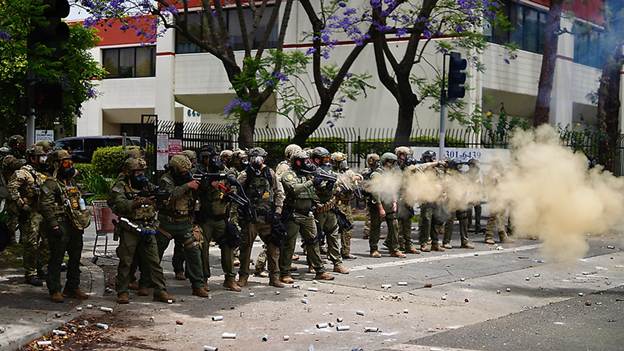
🔥 Federalism Flashpoints
In September, the Federalism Policy Tracker added more than a dozen new entries covering a range of critical issues affecting states—including deployment of troops to several U.S. cities, new proposed mass layoffs, a BLM land audit, and new developments in the ongoing legal challenges aimed at halting or limiting President Trump’s “Agenda 47.”
I: Executive Orders
In September, President Trump signed 10 executive orders. See our Executive Orders Tracker for more, including recent challenges. As of writing, President Trump has issued 206 Executive Orders, averaging approximately 0.76 executive orders per day. This is down from 0.91 orders per day, recorded back in June.
0.76 executive orders per day
For context, during his first term, President Trump signed 55 executive orders over the entire year, averaging about 0.15 per day. President Joe Biden issued 77 executive orders his first year in 2021, averaging 0.21 per day. President Franklin D. Roosevelt, known for his extensive use of executive orders during the Great Depression, issued 569 in 1933, averaging 1.56 per day.
Executive Orders by Topic
September update:
As we’ve noted in the past, simply counting executive orders is not a great way to measure presidential power, let alone the health of the federal system. We note, for example, the high number of EOs (31) aimed at reducing the size of government and/or breaking down or dismantling the “Administrative State”:
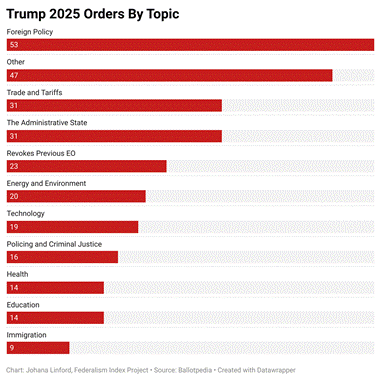
While the Trump presidency continues to be defined by a dramatic increase in the use of executive power, we have also seen a corresponding – and unprecedented – volume and pace of legal challenges to Trump Administration actions.
II: Executive Power Pushback
September offered a reminder that states continue to play an important role in balancing and checking federal intrusions on state and local jurisdiction where appropriate. In this section, we look at six recent examples of pushback and coordination. We highlight these examples because they bear directly on the balance of power between the federal government and the states. These examples have also generated significant public attention, debate, controversy, or legal action. We take no position on these or any other actions.
- Cities Sue DHS. On October 1, 2025, more than two dozen cities and counties filed suit challenging new DHS grant conditions tied to immigration, diversity programs, and executive orders. Plaintiffs argue the terms are coercive under the Spending Clause, while the administration says it may lawfully set eligibility requirements for federal funds.
- States Sue DOJ. Also on October 1, 2025, a coalition of states sued DOJ over restrictions on grants for domestic-violence and sexual-assault services. The states claim the limits violate the Spending Clause and are arbitrary under the APA, while DOJ maintains discretion to define program eligibility.
- Funding Conditions Invalidated. A federal court on September 24, 2025, ruled that new FEMA and DHS emergency-preparedness grant conditions were unconstitutional. The court held the requirements violated the Spending Clause and the Administrative Procedure Act, rejecting DHS’s position that broad immigration certification could be attached to all grants.
- Removal Power. On September 9, a federal judge in D.C. issued a preliminary injunction preventing President Trump from removing Fed Governor Lisa Cook (i.e. blocking his attempted dismissal). On September 15, the D.C. Circuit Court of Appeals rejected the administration’s emergency appeal — the courts reaffirm that Cook cannot be removed before the September FOMC meeting.
- Mass Layoffs. On September 24, the Office of Management and Budget (OMB) issued a memo instructing federal agencies to prepare reduction-in-force (RIF) plans to eliminate positions in the event the federal government shuts down on October 1. Critics have argued that historically, during shutdowns federal employees are furloughed (i.e. temporarily laid off) or deemed “excepted” (required to continue working in essential services) — but they’re usually reinstated and paid retroactively once funding is restored. On September 30, two major federal unions (AFGE and AFSCME) sued the Trump administration (OMB and OPM) to block these RIF plans, arguing they are illegal.
- Trump v. Slaughter. In September, the Supreme Court granted certiorari in Trump v. Slaughter, a case about whether the President may remove Federal Trade Commission (FTC) commissioners who enjoy “for cause” statutory protection (i.e. only removable for neglect, inefficiency, or malfeasance).
III: Congress
While much of the spotlight remains on Trump, a number of bills are currently under consideration that could have significant implications for states and for the federal structure more generally.
Congress spent much of September 2025 consumed by efforts to avert a looming government shutdown, but several legislative actions and debates during the month nonetheless engaged central issues of federalism and executive authority.
Chief among these was the House’s passage, on September 19, of a continuing resolution (CR) to fund the federal government through November 21. Although the measure passed narrowly (217–212), it excluded extensions of Affordable Care Act (ACA) premium subsidies—an omission that sparked immediate conflict with Senate Democrats and the White House and led to its rejection in the Senate (48–44).
Congress also advanced several immigration and border security measures, including the Stop Illegal Entry Act of 2025 (H.R. 3486), debated in the House on September 11. The bill proposed expanding federal enforcement authority at the border and imposing new requirements on state and local law enforcement to coordinate with federal agencies in detaining and transferring undocumented migrants.
The broader budget standoff itself heightened structural concerns about executive power. Congress’s failure to enact appropriations before the September 30 deadline opened space for the executive branch to direct agencies to prepare reduction-in-force (RIF) plans during a potential shutdown. Critics argue that such directives exceed statutory authority and undermine Congress’s constitutional power of the purse by allowing the executive to shape budgetary outcomes without legislative approval. Supporters counter that the administration is acting within its duty to ensure the continuity of government operations and that pre-emptive RIF planning is a lawful exercise of executive discretion in the absence of appropriations.
IV: Developing Issues
Government Shutdown
The federal government officially shut down on October 1, 2025, after Congress failed to agree on funding. In this context, actions by the executive to freeze or redirect funds become especially potent.
While some Democrats view the shutdown as a “necessary evil” to slow or check the president’s agenda, others warn that the standoff has also expanded executive influence in unexpected ways. At the end of September, for example, Trump met with White House budget chief Russ Vought to discuss “what Democratic agencies” should face cuts, recasting the shutdown as an opportunity to shrink the federal workforce. Critics see this as an abuse of the crisis to pursue partisan objectives and weaken agencies that oppose the administration’s priorities, while supporters argue that reducing the size of government is a legitimate policy goal and that the budget impasse offers a chance to rein in bureaucratic overreach and realign federal spending with voter preferences.
V: The Courts
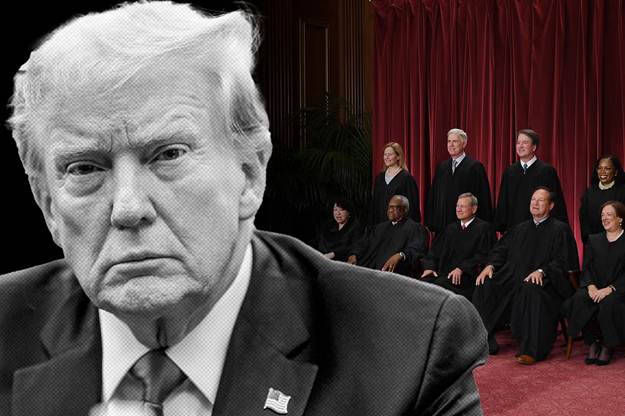
President Trump’s second term, perhaps unlike any other president in American history, is also putting a spotlight on the Courts. As one commenter put it,
“No modern president has done more in his first 130 days than President Trump-only to have much of it undone, at least temporarily, by the courts.”
As of writing, 430 cases are being tracked (see Just Security Litigation Tracker).
29 cases have been blocked, with 83 more temporarily blocked, and 19 blocked pending appeal. 10 have been blocked in part.
About 32% of cases against President Trump have been blocked or partially blocked.
Agencies
Federal agencies create regulations through a structured process known as rule-making, which is governed by the Administrative Procedure Act (APA) of 1946. In theory, this process helps to ensure transparency, public participation, and accountability in the development of federal regulations.
The Trump administration has added an average of 1,117 pages each week to the Federal Register for a total of 41,342 pages for the year to date.
This includes 1,124 proposed rules and 1,795 final rules.
1,124 proposed rules and 1,795 final rules
Key Points and Data
New data from Ballotpedia show that federal regulatory activity has slowed significantly under President Trump compared to the same point in President Biden’s term, with agencies issuing far fewer major rules in the third quarter of 2025 than they did four years earlier.
From July 1 to September 20, federal agencies issued 783 final rules and 496 proposed rules, down from Biden-era levels. Only 28 significant final rules—those expected to have substantial economic, environmental, or governmental impact under Executive Order 12866—were published this quarter, compared to 66 significant rules during the third quarter of 2021. The Federal Register grew by 19,256 pages in that period, reaching a year-to-date total of 47,228 pages, while agencies published 6,838 documents in total, including 5,467 notices and 92 presidential documents.
While rulemaking has declined, the White House has relied more heavily on direct executive actions: Trump has issued 413 presidential documents so far this year, compared to 364 during the same period under Biden. Analysts say this shift signals a broader deregulatory strategy that seeks to streamline or roll back existing federal rules rather than expand them. Examples include an EPA proposal to reduce data-reporting burdens on chemical manufacturers and a USDA rule rescinding enhanced benefits for “socially disadvantaged” producers.
The decline in significant rulemaking could have major implications for federal-state relations.
Many of these high-impact rules shape how states implement federal programs, meet environmental standards, and comply with public health and safety mandates. Fewer new regulations may ease compliance burdens and give states more flexibility, but they could also leave policy gaps that increase uncertainty or shift more responsibility to state governments.
Read the full Ballotpedia report here →
For more on regulations and how they affect American federalism, see our Regulations primer here
- Brookings has a regulatory tracker that provides limited analysis of a few select regulatory and deregulatory changes made by the Trump administration. View the tracker here.
Supreme Court
In September, the Supreme Court heard 0 cases, decided 10 emergency applications, and issued 0 opinions.
The Court will officially start its 2025-2026 term in October. For an updated calendar, check the SCOTUSBlog homepage, which lists the days for arguments, conferences, and decisions. You can find the calendar here.
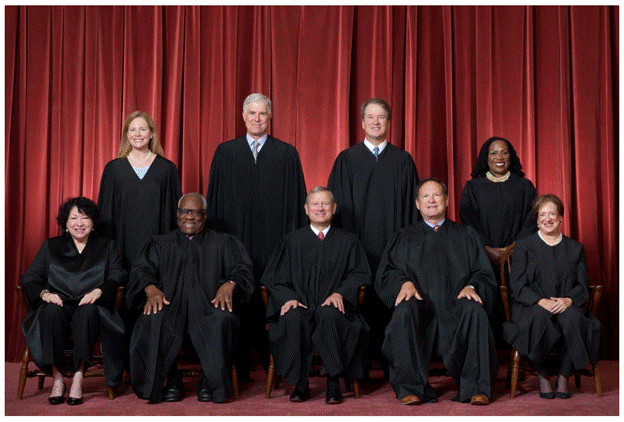
Emergency Docket:
- South Carolina v. Doe: This case involves an appeal from South Carolina about a teen in their state who identifies as transgender and seeks to use the corresponding bathroom at school. The teen claims that the state law violates equal protection rights as well as federal civil rights that bar gender discrimination in educational programs. A federal court ruled in favor of the teen, which was then appealed to the Supreme Court by South Carolina. The Supreme Court ruled on September 10th to keep that ruling in order, but indicated that they are not ruling on the merits. They found that South Carolina would not be harmed if the lower court’s ruling were kept in place.
- New Jersey Transit Corporation v. Colt: This case involves an issue of sovereign immunity for New Jersey Transit. The Supreme Court paused a NY trial between the parties in this case, citing concerns over the claims of Colt. The Supreme Court will hear oral arguments for similar cases this upcoming term and has delayed the proceedings of the NY court until that time.
- Trump v. Slaughter: This case involves FTC Commissioner, Rebecca Slaughter, who was fired earlier this year by President Trump. Slaughter sued, and a federal court put a block on that order, allowing Slaughter to return to work with her case continued. The Supreme Court decided to take up this case and put a hold on U.S. District Judge Loren AliKhan’s order. This effectively let President Trump fire Slaughter until the case is decided later this term.
Upcoming:
- Louisiana v. Callias: This case concerns a Louisiana redistricting plan that internationally created a second majority-minority congressional district in the State and whether its creation is a violation of the 14th and 15th amendments. This case was supposed to be argued late last term (May 2025), but was moved back. The Supreme Court asked to be rebriefed and for the case to be reargued. The Court will hear arguments on October 15.
- Bost v. Illinois State Board of Elections: This concerns three Illinois lawmakers who are challenging the state’s mail-in ballot rules. They argue that they have the right to sue under Article III standing, but this argument was rejected by the Seventh Circuit, which argued that the candidates didn’t show the ballot law showed concert, personal harm. The lawmakers appealed to the Supreme Court which granted certiorari. The Court will hear arguments on October 8.
State Supreme Courts
State supreme courts have issued over 6,421 opinions in 2025. That is the equivalent of roughly 23 opinions per day.
These cases cover a variety of topics, including:
- Voting Rights and Election: Republican National Committee v. Eternal Vigilance Action, Inc; Georgia v. Eternal Vigilance Action, Stein v. Berger,
- Reproductive Rights: Planned Parenthood of Montana v. State (Planned Parenthood 1), Isaacson v. Arizona, Doe v. Uthmeier,
- Speech and Religion: Grube v. Trader; State v. Rogan, Paxton v. Annunciation House, Care and Prevention of Eve, and Perez v. City of San Antonio,
States
Although most attention has been centered on the actions of the Executive, it is worth remembering that states remain the most important site of most legislation, even in this era of the so-called “imperial presidency.” As of writing, there are currently more than 150,771 bills and resolutions across the 50 state legislatures.
In many ways, states continue to be “the first branch of government.” States have been actively working on ways to improve and control the “administrative state” in their own state capitals. A recent tool from Ballotpedia is currently tracking 2,269 state bills in areas including nondelegation, judicial deference, executive control of agencies, procedural rights, and agency dynamics.
Multistate Lawsuits
As of writing, there are at least 30 multistate lawsuits against the Trump administration.
Comparing second-term lawsuits (dating back to 1980), Trump has surpassed Reagan (16) and Clinton (24), but remains behind G.W. Bush (41) and Obama (55).
Some recent multistate lawsuits include:
- Wind Farm Halt: 17 Democratic-led states and the District of Columbia have sued to block the Trump administration’s directive that pauses new wind energy leasing and permitting in Rhode Island and Connecticut. In their lawsuit, the states claim the federal government overstepped its authority, undermined state energy policy, and illegally blocked a project that had already passed environmental review and received major financial commitments. Learn more here
- Emergency Preparedness funding: The Minnesota AG and a coalition of 21 states filed suit against FEMA and DHS over alleged illegal coercion in regards to cutting emergency preparedness funding unless states comply with sweeping immigration enforcement provisions. On September 24, 2025, a U.S. District Court in Rhode Island granted summary judgment in favor of the states, restoring billions in public safety funding. Read more here
Get in Touch!
What issues matter to you most? What policies are you watching in your state? What did we miss? Let us know!
Authors: Johana Linford, Noah Farnsworth, and Andrew Bibby